
How 240 Electric Buses Could Transform Urban Transport in Chhattisgarh: IAS Sonmani Bora’s Administrative Challenge
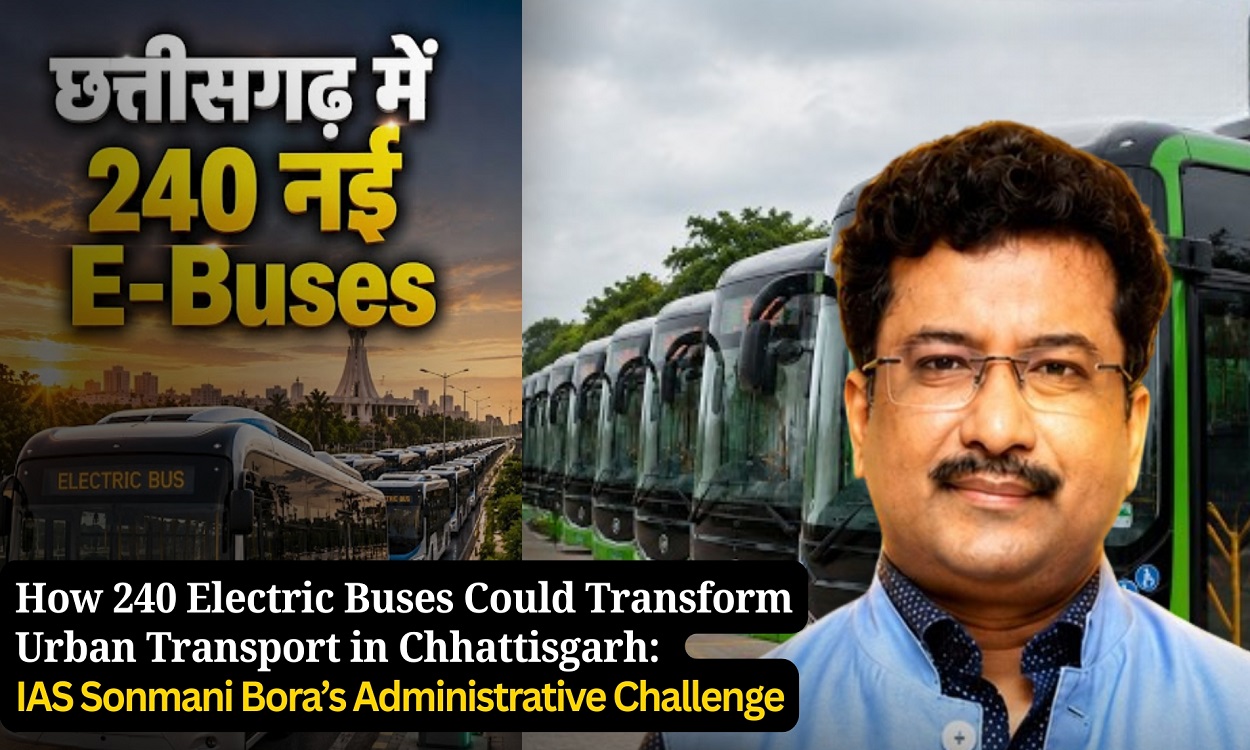
Raipur, Bilaspur, Durg-Bhilai and Korba are preparing for a major public transport upgrade. Under the PM-eBus Sewa Scheme, 240 electric buses are planned across four urban centres, with digital ticketing, mobile-based route information and enhanced safety features forming part of the proposed system.
Special Report | CGNews24.com
For thousands of people living in Chhattisgarh’s cities, commuting is an everyday challenge. Office workers need reliable transport to reach their workplaces on time, students depend on convenient connections to educational institutions, and patients must be able to reach hospitals without unnecessary delays. As cities expand and traffic volumes increase, the availability of affordable and dependable public transport becomes increasingly important.
Against this backdrop, Chhattisgarh is preparing to introduce 240 electric buses across four major urban centres under the PM-eBus Sewa Scheme. The initiative covers Raipur, Bilaspur, Durg-Bhilai and Korba, with the objective of modernising urban mobility and making public transport cleaner, more convenient and more accessible.
The Urban Administration and Development Department has a significant role in moving the initiative from planning to implementation. IAS officer Sonmani Bora, Principal Secretary of the department, is among the key administrative officials associated with the programme’s preparation and coordination.
The project involves more than simply placing electric buses on city roads. It requires coordination among municipal corporations, the selected operating agency and the state administration. Route planning, charging infrastructure, passenger safety, digital ticketing and reliable day-to-day operations will all influence whether the initiative delivers the intended benefits.
On October 11, 2026, a concession agreement was signed in the presence of Deputy Chief Minister and Urban Administration Minister Arun Sao between the municipal corporations of Raipur, Bilaspur, Bhilai and Korba and the selected agency, Chartered Speed Limited. The agreement marked an important step towards implementing the planned services.
However, the real measure of success will be whether residents can use the buses regularly, travel conveniently and depend on the service for their daily journeys.
240 Electric Buses Planned Across Four Cities
Under the first phase of the PM-eBus Sewa Scheme, Chhattisgarh has planned 240 electric buses for four urban areas. The proposed city-wise allocation is as follows:
- Raipur: 100 electric buses
- Bilaspur: 50 electric buses
- Durg-Bhilai: 50 electric buses
- Korba: 40 electric buses
Raipur will receive the largest allocation, with 100 buses planned for the state capital. The allocation reflects the importance of strengthening public transport as the city expands and commuting requirements increase.
Bilaspur, Durg-Bhilai and Korba are also expected to benefit from additional public transport options. For residents, a well-planned bus network could make travel to workplaces, educational institutions, hospitals, markets and administrative offices more convenient.
Yet the number of buses alone will not determine the programme’s effectiveness. Routes must be designed around passenger demand, and services must operate at times that suit commuters.
A successful urban bus network needs to connect residential neighbourhoods with important destinations while maintaining predictable schedules. The challenge is therefore to ensure that the proposed fleet becomes an integrated transport service rather than simply an addition to the number of vehicles available.
IAS Sonmani Bora’s Role in the Administrative Coordination
Large public transport projects require sustained coordination between government departments, municipal bodies and private operators. Even when the vehicles and operating agency have been identified, several administrative and operational tasks must be completed before a reliable service can be delivered.
As Principal Secretary of the Urban Administration and Development Department, IAS Sonmani Bora has an important administrative role in the implementation framework.
The department has provided information on the proposed bus allocation, operational preparations and passenger facilities. The next stage involves translating these arrangements into a functioning transport network across four different urban areas.
This requires attention to several interconnected responsibilities.
First, routes must be planned according to local travel requirements. Second, the necessary infrastructure, including depots and charging facilities, must be available. Third, the operating agency must be prepared to deliver services according to the agreed arrangements. Finally, the municipal corporations and the department must monitor operational performance and address problems that arise after services begin.
The coordination challenge is particularly important because each city has different transport patterns, passenger volumes and infrastructure requirements.
Raipur’s needs may differ from those of Bilaspur, Durg-Bhilai or Korba. A uniform fleet allocation therefore needs to be supported by local route planning and operational decisions.
The administrative test for the department will be whether these different requirements can be managed within a coordinated implementation framework.
For Bora and the departmental team, the broader objective is to ensure that the project progresses beyond agreements and announcements and becomes a dependable public service.
November 1 Target for the Initial Services in Bilaspur and Bhilai
Bilaspur and Bhilai were identified for an initial symbolic launch of electric bus operations. According to information provided by the department, the target was to begin operating 20 electric buses in each city by November 1, 2026.
The proposed initial deployment represents an important milestone in the programme. Starting with a limited number of buses could provide operational experience and help authorities identify areas requiring improvement before further expansion.
However, a target date should not be confused with confirmation that services have actually commenced. The operational status, availability of buses and commencement of regular passenger services need to be verified through current official information from the relevant municipal corporations or the department.
Raipur and Korba also require continued preparations for their planned fleets. Given the different allocations across the four cities, route planning, charging infrastructure and service schedules will need to reflect local requirements.
The success of the initial rollout will depend not only on the availability of buses but also on whether passengers can access the service easily and rely on it for their daily journeys.
Digital Ticketing, Mobile Route Information and Six Cameras Per Bus
The planned electric buses are expected to incorporate modern passenger facilities, with an emphasis on convenience, technology and safety.
According to information shared by the department, the proposed features include mobile-based fare payments, online ticketing, camera-based monitoring and mobile access to route information.
Mobile-based fare payments: Passengers will be able to pay fares using a mobile scanner, making digital transactions more convenient and reducing dependence on cash payments.
Online ticketing: The planned online ticketing facility is intended to simplify the process of obtaining tickets and improve the passenger experience.
Six cameras in every bus: Each bus is planned to have six cameras to strengthen onboard monitoring and support passenger safety.
Mobile app for route information: Passengers will be able to access information about bus routes through a mobile application, helping them plan their journeys more efficiently.
These features are intended to make public transport more accessible and organised. However, their effectiveness will depend on reliable technology, clear passenger guidance and regular maintenance.
Installing cameras, for example, is only one part of a safety system. Their continued functionality, monitoring arrangements and procedures for responding to incidents will also matter.
Similarly, digital ticketing and mobile applications will provide meaningful benefits only if passengers can use them easily and the systems remain dependable.
How Electric Buses Could Help Reduce Urban Pollution
Growing traffic volumes have made air quality and environmental sustainability important concerns for urban authorities. Conventional fuel-powered vehicles contribute to local air pollution, while dependence on petrol and diesel also creates exposure to fluctuations in fuel costs.
Electric buses offer an alternative for public transport operations.
Because battery-electric buses have no tailpipe emissions while operating, they can help reduce pollution at street level compared with conventional combustion-engine buses. They can also reduce direct dependence on petrol and diesel for passenger transport.
If the buses attract sufficient passenger numbers and encourage people to use public transport instead of private vehicles, they could also contribute to more efficient urban mobility.
The overall environmental benefit, however, depends on several factors, including the source of electricity, vehicle utilisation, maintenance and the extent to which public transport replaces private journeys.
The PM-eBus Sewa Scheme aims to encourage cleaner and more convenient public transport in urban areas. Chhattisgarh’s planned fleet forms part of this broader effort to modernise city transport.
For the initiative to deliver lasting benefits, electric buses must operate regularly, routes must meet passenger needs and the supporting infrastructure must function effectively.
Charging Stations and Depots Will Be Critical to Success
Electric bus operations require a supporting infrastructure that goes beyond the vehicles themselves.
Charging facilities must be available when buses need them, depots must be equipped to support daily operations, and maintenance systems must be capable of keeping vehicles in service.
If charging infrastructure is inadequate or maintenance takes too long, scheduled services can be disrupted. This makes infrastructure readiness an essential part of the implementation process.
Earlier departmental reviews have emphasised the importance of connecting routes with schools, colleges, hospitals, major markets and other public destinations. The need for depots, charging stations, bus stops and technology-based monitoring has also been highlighted.
These requirements show why the project cannot be assessed solely by the number of buses allocated to each city.
The transport network must function as a complete system. Vehicles, charging facilities, route planning, schedules and operational supervision need to work together.
The Urban Administration and Development Department will therefore need to ensure that infrastructure and operational preparations progress alongside the deployment of the fleet.
What Could the New Bus Network Mean for Ordinary Citizens?
The most important measure of any public transport initiative is the difference it makes to people’s daily lives.
If services begin operating regularly on routes that match passenger demand, the planned electric buses could offer residents an additional way to travel across the four cities.
Office workers could benefit from more public transport options. Students could find it easier to reach educational institutions, while residents travelling to hospitals, markets and administrative offices could have additional transport choices.
Digital ticketing could make payments more convenient, while mobile route information could help passengers plan their journeys. Onboard cameras could support monitoring and contribute to a safer travel environment.
However, these benefits will depend on practical implementation.
Passengers need services that run on time, cover useful routes and remain affordable. Bus schedules must be designed around actual commuting patterns, and the operating system must respond effectively when services are delayed or disrupted.
Passenger feedback will also be important. Authorities should be able to identify routes with high demand, assess where additional services may be needed and improve the network based on how people actually use it.
Without these operational measures, the benefits of a modern fleet could remain below expectations.
Coordination Between Municipal Corporations and the Operating Agency
The deployment of 240 electric buses across four urban areas represents a substantial operational responsibility.
Each municipal corporation will need to work within the broader project framework while addressing its own local requirements. The operating agency must deliver services according to the agreed arrangements, and the department must maintain oversight of implementation.
The concession agreement signed on October 11, 2026, was an important step in this process.
Deputy Chief Minister Arun Sao was present at the agreement programme, which also involved senior officials from the Urban Administration and Development Department and the State Urban Development Agency, along with representatives of the participating urban local bodies.
The agreement established a framework for moving the project forward. The next challenge is to ensure that the arrangements translate into actual bus operations.
This includes the availability of vehicles, readiness of infrastructure, functioning ticketing systems, route information and passenger safety arrangements.
It will also be important to establish clear accountability for operational performance. Residents ultimately judge a public transport service by whether the bus arrives when expected, whether the journey is convenient and whether problems are addressed effectively.
Moving from Project Preparation to Reliable Public Transport
Chhattisgarh’s plan to introduce 240 electric buses across Raipur, Bilaspur, Durg-Bhilai and Korba represents a significant effort to modernise urban mobility.
The proposed allocation of 100 buses to Raipur, 50 each to Bilaspur and Durg-Bhilai, and 40 to Korba could expand public transport options across the four urban centres.
The Urban Administration and Development Department has a central role in coordinating the project, and IAS Sonmani Bora’s administrative responsibilities form part of this implementation process.
The next priority is to ensure that planning and agreements translate into dependable services. This will require coordination between the department, municipal corporations and the operating agency, along with continued attention to infrastructure, route planning, safety and passenger convenience.
The November 1, 2026, target for the symbolic commencement of 20 buses each in Bilaspur and Bhilai was an important milestone in the original implementation plan. The actual commencement and present operating status should be confirmed through official updates.
Ultimately, the programme’s success will be measured by the quality and reliability of the service delivered to citizens—not simply by the number of buses announced or allocated.


